Showing posts with label #52Ancestors. Show all posts

Saturday, April 30, 2022

Travel Documents


The theme for this week’s 52Ancestors challenge is Documents.  In genealogical research, especially to prove relationships, documents are an important source of information.  There are many types of documents that provide information such as birth, death, and marriage data, but there are also documents that provide more personal information and those are so fun to find. 

I have discovered several documents for my great grandfather Albert Henry Woodman.  I’ve written about Albert before in my Favourite Picture post and today I am writing a little more because I have pages of his passport from 1920 and several travel documents for him. Albert travelled quite a bit before settling in Canada when he married his second wife, Bernadette, in 1925. 

The first travel document I found for Albert is a passenger list, for the ship Sardinian which left England on Jul 23, 1908.  He left there with his first wife Ethel. The Sardinian travelled to Le Havre, France before sailing to Montreal, Quebec, arriving Aug 5, 1908. 


Source Ancestry.ca

I found that Albert made several trips to Buffalo by finding manifests in the U.S. Border Crossings from Canada to the U.S.  Albert's brother Thomas lived in Buffalo and at one time Albert had applied for Naturalization to the U.S., but this must not have occurred because he lived his life in Canada.  

The manifest document below refers to his next of kin as his daughter Daisy in Deseronto and the person he is visiting is his brother Thomas.  It even provides Thomas's address in Buffalo.  Helpful details in my research of his family.  It also confirms his arrival aboard the Sardinian in 1908 supporting what I found in the passenger lists.

Source Ancestry.ca

The passport documents describe his appearance and confirms his birth details.  This legal document also cites his children Ethel, age 12, and Robert, age 6 who were about to travel with him.  It describes his features and his “National Status” which is a “British Subject.”  The description of him is nice to have but other details supports previous research.  The more documents you can find to support your research the better you can trust that research.  
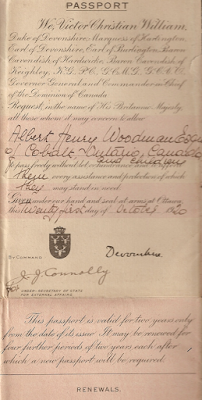
   

Source: Woodman family cousin 

This passport was for a return to England with his children, Ethel and Robert, aboard White Star Dominion Lines’ ship the Megantic.  It arrived in Liverpool, England on November 23, 1920. On the document, U.K. Incoming Passenger Lists, it caught my attention that in the column “Country of Intended Future Permanent Residence” England is what he listed for all three of them. The image below shows the top of the page and the section for Albert and his two children.  The one's on the far right are representative of England as the country.


Source: Ancestry.ca

It does open new questions as to his intentions because his youngest daughter, Daisy, was still in Canada.  There is family lore that says Daisy was adopted by a family in Deseronto, Ontario.  Was he planning to remain in England but later decided to return?  I know that he returned to Canada and that he left Ethel and Robert in the care of his mother.  I can only imagine the conversations with his family and some heartbreaking decisions that were made in the best interest of the children.

Albert returned to Canada alone aboard the Empress of Britain in February 1921.  On another document, Form 30A – Ocean Arrivals, when asked the “Object in coming to Canada” he responds, “Returning to business.”  And his response to “Why left Canada” is “visit to England.” He signed this document on January 11, 1921.  This document supported my original understanding of his story that it was his intent to leave Ethel and Robert in England with their grandmother.  A consideration when finding information on documents such as a passenger list is that sometimes the person responding to the questions may have given the simple answer.  Perhaps it was just easier to say that they were all staying in England if the children were near when he responded.  Maybe he hadn’t told them because he hadn’t completely made the decision, or maybe he had intended to stay and later changed his mind.  There is just no way to know that level of his personal story from a document.

Source Ancestry.ca

To make genealogical research efforts more interesting and help build our ancestors story, look beyond just the vital statistics and census records.  Look for documents like travel, military, land, and estate documents.  Those other types of documents broaden our ancestors’ story to makes it more personal and interesting for sharing with others.

This picture of Robert, Albert, and Ethel was in the documentation for the passport.  The photo used on the passport was slightly different with Robert standing in front of Albert.

                                                                                                        Source: Woodman family cousin 


Saturday, April 2, 2022

Joined Together


Column heading - Clipping from Newspapers.com


I recently got a pleasant surprise as I searched Newspapers.com for mention of my grandparents, Ronald and Ivy Gordon in our local newspapers and discovered a column called “Weddings of Interest” that highlighted the wedding of their daughter Phyllis.  It was written on September 11, 1957.

I enjoyed reading about the ceremony and the description of the bride’s gown, “…a white nylon lace over taffeta, with matching bolero and street length skirt.” And “a shoulder length veil fell from a tiara of white flowers, and she carried a nosegay of white carnations and lily-of-the-valley.”  She must have looked so beautiful. 

Much of the column discusses the dresses and accessories of the ladies which included her sister Florence, her mother "Mrs. Gordon", and the groom's mother "Mrs. Fraser." 

It seems these days, unless you’re a celebrity, you don't see this kind of local interest story in the paper. It was a nice surprise that made my day while I learned another tidbit of information about my Gordon family. 


Column heading - Clipping from Newspapers.com

Saturday, March 19, 2022

A Rose by any other name...

I wasn’t sure what to write about for this week’s prompt “Flowers.”  I have no prominent stories about ancestors with a flower name, or who may have owned a flower shop, or loved to garden.  So, I decided to pick a female ancestor with a flower name and do a profile on that person. 

It’s probably not a shock that the most common flowers in my tree are roses, lilies, and violets. There is also a scattering of myrtle, daisy, heather, and ivy with a few floras and a bella. I found several versions of rose including Rose, Rosamund, Rosemary, Rosena, Rosalie, and Rosa a few variations of lily - Lily, Lilly, Lillian, and Lillias.  Most of the others are spelled the same as the flower and in one instance I have a Viola that I grouped in with violets.  My Woodman/Wood family represent half of the flower names in my tree and most of those were some forms of Rose.  There are two instances of Ivy, and both are my paternal grandmothers: Ivy Irene Pearce (biological) and Myrtle Ivy Oikle. 

Rose Ellen Holder (Pearce)
Photo shared on Ancestry by D Rhymer

I decided to profile my paternal great-grandmother Rose Ellen Holder (Pearce).  This line is new in my research and thankfully, I’ve learned a bit about the family from my ‘new’ siblings and cousins to help me get started on my journey.

Rose Ellen Holder was the daughter of Stephen Holder and Mary Jane Mosely.  She was born in Stedham, Sussex, England on April 19, 1874, and baptized there on June 21, 1874.  Her baptism record indicates her first name is Rosa and this is also supported on the 1881 Census of England.  She is living with her father, a “Housemaker,” older brother Stephen age 9, and her two younger sisters, Cathleen, and Edith Jane.  There is a notation that her mother is “away from home attending sick Aunt in Stedham”


1881 Census record from Ancestry

I am still trying to source their marriage date.  I found an index record for Philip Charles Pearce that indicates he married sometime between April and June 1898.  On the 1911 Census of England and Wales it says the duration of marriage is 12 years. The census was done on April 2, 1911 and I think it is safe to assume that their 13th anniversary was coming soon.  On the 1911 census the head of the family signed the page of family details so I am confident that the information is correct.  It also looks like the handwriting of the family details is the same as Philips signature and I suspect he completed the questions himself.

1911 Census Record from Ancestry


Together they had 11 children.  Two died very young, Leonard Stephen (b: 4 Oct 1901 d: 19 May 1903) and Edith Rose (b: 6 Dec 1905 d: 4 Apr 1906) and they lost their eldest son Phillip Alexander on 11 Jul 1917 at the age of 18, to diphtheria while he was serving in the British Royal Navy in WW1.  Rose Ellen is listed as the next of kin on his Pension Record and it was she that was the “relative notified” of his death. 


Both of the above images from Fold3

Rose Ellen, Philip and five of their children appear in the 1921 Census of England residing in the Parish of Martyr Worthy, Regional District of Winchester in the County of Hampshire. This is the last census they appear on in England.

Image from Google search images

On Friday, April 2, 1926, Rose Ellen and her husband boarded the Cunard ship Andania with their five youngest children.  At the time Cunard was offering “Special Fares for Approved Settlers.”  I suspect this term may be referring to settlers approved under the Empire Settlement Act of 1922 which was an agreement between the British government and several commonwealth countries to facilitate the resettlement of agriculturalists, farm labourers, domestics, and juvenile immigrants.  Reduced transportation fares, agricultural training and financial aid was offered as well as payment plans to help purchase farms. On the passenger list for the Andania the occupation given for Philip, Edward, and Alfred is Farming.  

Clip from The Western Daily Press (Bristol, Avon, England) 
Date: 24 Mar 1926
Source: Newspapers.com

                                        Passenger List from Ancestry

They arrived in Halifax, Nova Scotia on 11 April 1926 with $250.  From Halifax they were heading to the Govt. Offices in Drayton, Ontario, travelling inland on CN Rail.  Each entry is stamped LANDED Immigrant.  And so began their life in Canada.  

I did find a fun story about the Anadania on the day they arrived about the gangway falling away early.  I guess they are lucky they had already disembarked!


Clipped from The Evening Mail newspaper, Halifax  
Date: 12 Apr 1926
Source: Newspapers.com 

I’m still learning about Rose Ellen and her family.  I know they settled around Inverary, Ontario.  On their daughter Ivy Irene’s marriage record her occupation is “Farmers Daughter” and her groom; Ronald Alfred Gordon is a “Farmer.”  I’ve been told that they met when he was working on her father’s farm.

I don’t have an exact date or record for Rose Ellen’s death.  I know it was after 1950 because I have a picture of Rose from that year.  Some family tree hints give November 1957, but none have sources.  That will be something new to disover as I continue to learn about this branch of my family tree. 

Rose Ellen Holder, 1950

   Photo shared on Ancestry by D Rhymer

Thursday, March 3, 2022

Woman of the Week - Sophia (Munroe) Davis

March is Women's History Month.  What better time to write about our female ancestors! It is also the theme for this month's writing prompts so I will be visiting the ladies in the line for interesting stories to share. This week I start with Sophia Davis (nee Munroe).

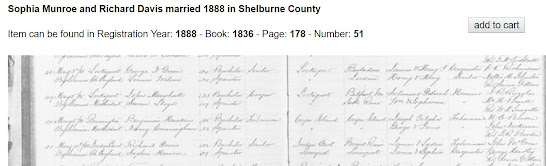
My great-grandmother Sophia is a character who has fascinated me. She is somewhat of a mystery as I haven’t confirmed information on her ancestry. The Nova Scotia Archives marriage record lists her parents as James and Sophia and that her father was a carpenter and that is as far as I’ve gotten.

Why I find Sophia interesting, is the life she led. I have come to discover that she married very young, didn’t put up with unfaithful men, and mothered 15 children with 3 different men. Her history started an interesting journey that took years to figure out and eventually DNA testing to prove. So here it is…the life and times of Sophia Munroe.

Sophia was born around 1870 and was a teenager in the late 1800’s while Shelburne was flourishing with ship building. There were many skilled craftsmen and sailors in the area. Sophia’s father was a carpenter, so I think he was probably  working on the ships.

She met and married a young sailor, Richard Calvin Davis, who was about 5 years older than she. I tend to romanticize the relationship. Imagining a handsome young sailor and a smitten 18-year-old girl giddy with the attention he paid her. Richard and Sophia were married on May 10, 1888 and there first son, William, was born in July of that year.

In 1888 it was immoral to have had a pre-marital sexual relationship and I suppose it was a “shotgun” wedding which may explain why the marriage was doomed. I can’t honestly say that they did not love one another in the beginning, but the union only lasted five years. Apparently she caught him cheating on her while she was pregnant with their 5th son Ernest born in 1893. An elder relation, Rose, tells a story that Sophia left Richard after he was caught cheating and as Rose put it, “Sophia chose someone who would be faithful to her, namely Will Dering, a black man from the West Indies.” 

In 1894, she was in a relationship with Will, and they were together 20 years give or take, and had 9 children. My grandfather, Arthur, was the first of these children, born December 2, 1894. This was confusing to me in my early research because I had a birth record indicating the Richard was his father. Through genealogy message groups I connected with a distant cousin who lives in Shelburne, and she explained that Will was Arthur’s father. She sent me information on the relationships to help me figure it out. I later met her on a trip to Shelburne and was shown pictures of family there. I had no doubt it was true. There were a lot of similarities in appearance to my siblings and cousins at home. A few years ago, my brother took the Ancestry DNA test, and it was proven that Will Dering is our great grandfather.

Sophia and Richard never formally divorced. Divorce itself was extremely uncommon but not unheard of, especially in Nova Scotia, one of 3 provinces to have divorce courts at the time. Adultery was virtually the only basis for divorce, but women had to prove adultery and some other form of wrongdoing to get one.

A comparison of census reports is interesting in piecing together Will and Sophia’s family.

  • ·   On the 1901 census they were still indicating the colour of an individual. On this census Will is the head of the household and Sophia a widowed lodger. His father, sister, and brother also live with them. There are 7 children living with them under the Davis surname. William, George, and Calvin have “W” beside their names. Ernest, Arthur, Mary, and Evelina have “B” beside their names.
  • ·   On the 1911 census Sophia indicates her marital status as “widow” and Will is “single”. There are six children listed under the Davis surname. They are William, George, Calvin, Ernest, Arthur, and Eliza and not one of them has a “relationship to the Head” in this case Will, on the form. There are five children under the Dering surname. They are John, Walter, Flossie, Russel, and Olive and  all children of Will.
  • ·   On the 1921 census Sophia is now living with a man 7 years younger than her, James Wilson. She is no longer claiming to be a widow but is listed as being single and a lodger. Grandpa Arthur is living with her along with 3 of her other children with Will – John, Russell, and Olive.

I don’t have information about her life with James.

Sophia lived until the age of 79 and she passed away at Roseway Hospital in Shelburne, Nova Scotia. She is buried in the Pine Grove Cemetery there.

Sophia seems to me to be such a character. First, marrying to conform to social pressure and avoid stigma then invite it as she began an unmarried, interracial relationship. Finally, her third relationship is not only interracial, but she has added the “older woman” stigma herself.

I respect her for following her heart. She left a cheating husband. She didn’t fear prejudices about interracial couples. She allowed herself to enjoy a relationship with a younger man.

Cheers to you Sophia!


Saturday, February 26, 2022

In the Courts


This week I am writing about the court case of my grandfather, Robert Woodman, in 1937 the year my mother was born. This is a recent discovery that I stumbled into on Newspapers.com. I had been working on my Gran’s ancestors, specifically her father Archibald Wood. Newspapers.com is a new resource for me and now as I’m working on an ancestor, I check it out. So, I did a search for Archibald Wood and got nothing. Then I remembered that he was usually referred to as Arch. I did a search for Arch Wood and BINGO a hit!

His name appeared twice at the bottom of page 3 in the Kingston Whig-Standard, Monday, November 8, 1937. From the preview I could also see the word Northbrook which was where he lived. I opened the link feeling that there was a good chance that this was referring to my great grandfather. The paragraph was reporting on the testimony of Mrs. Ezra Wood describing where she lived and that “Arch Wood lives near there.”  Further along she spoke of being at his house and seeing Robert Woodman there on an afternoon in February. Hmmm, I thought… what is going on here?

Have you ever started a small fix-it job that snowballed into something big?  This article was about to snowball. I scrolled to the top of page 3 and the headline read “Trial of Woodman is Resumed at Napanee.” I read on. The article started with the “Trial of Robert Woodman of Flinton, charged with the murder of…” and I thought “Oh no, not again.”  If you’ve followed my posts, you might recall my dad’s father being involved in a trial in Shelburne, Nova Scotia. I haven’t found the outcome of that but have two cousins, Donald, and Joanne, who are working on it.

I continued to read this article that outlined witnesses called by the Crown to tell of their acquaintance with both grandpa and the victim and the last time they had seen the deceased. A part of what Mrs. Ezra Wood (who is Arch’s sister-in-law), said was that on February 13 she had taken Mrs. Woodman up to Northbrook to get her husband who was in the beer parlour, and they had taken him home.  This gobsmacked me. My mother was born February 20, 1937. I thought about my poor gran, pregnant with her first child and dealing with that.

I found several articles from May 3, 1937, to November 10, 1937, about the trial. I saved and sorted them chronologically for reading and got to it. 

It was quite a sensational trial for the area and the time. Provincial police investigators were brought in to assist local authorities and forensic sciences were used to test clothing and other items in evidence. A “government medico-legal” expert testified that the bones found were human bones of what he believed to be an adult male. The authorities believed them to be a missing man who was a friend of my grandfather. Several articles mention the “considerable interest in the trial” and “a packed courthouse.”

Grandpa plead “not guilty” to the murder charge he was facing. He is described in the first article of the trial as “a young man of 23 years of age and is dressed in a blue suit, white shirt and dark tie, and wears glasses. He has dark brown hair.” 


Grandpa, unsure of age, but appears to be in his 20's or 30's

I read the graphic details of the state the body was found in and how it was found. As well as all the testimonies from individuals who knew of them and the police who conducted the investigation. I am not a legal expert, but as I was reading testimonies and details of the investigation, I remember having thoughts of “that's strange" popping into my head. I wondered why neighbours were imposing themselves into the police investigation.  Hanging around and involving themselves when inspectors were at a crime scene. Also, why things people claimed about my grandpa were taken as factual evidence. I’ve watched enough CSI to know that you don’t contaminate a crime scene and you need more than circumstantial evidence to convict someone.

On Jun 14th, Inspector Gurnett was on the stand and stated that two inspectors (Gardiner and Barrett) were sifting through some ashes while he took a dog owned by Inspector Gardiner and accompanied Lessard (a neighbour) to do some investigation. He had taken Officer Gardiner’s dog and accompanied by one Lessard, made an investigation. He said that he found a bone and “I called the dog and the latter got busy and soon we discovered a part of an arm.”  The judge later questioned Inspector Gardiner about the dog, remarking that he knew something about dogs. Gardiner told him it was an Irish setter and the judge said he never heard of an Irish setter or any other setter picking up a cold trail like that when it was so wet. Stating, “were it a hound, it might.”

There seemed to be a lot of focus on the victim having large amounts of cash on him all the time. Witnesses said it was common for him to have $400-$500 on his person. The defense council cross-examined witnesses about his work and earnings. The cash he was alleged to have couldn’t be matched to his earnings as a trapper. It does make me wonder (pure speculation) if he might have been involved in something nefarious that led to his death. That might even explain some of the unusual and changing witness testimony including the individuals who found the burned body contacting his mother instead of police.


Clip from Newspapers.com 

On November 9th, the Defense Attorney stated that they would not call any witnesses. According to the news article, “it created one of the rare situations in the history of Canadian murder trials.” They had summoned 11 witnesses, but Mr. Simpson (his attorney) felt that it was unnecessary in view of the evidence presented by the Crown. Apparently, the last afternoon of the trial was a parade of Crown witnesses, and several were let pass without any cross-examination by defense counsel. Grandpa’s sister Daisy was one of them and when she failed to answer the Crown’s questions with any degree of certainty, she had been warned by the judge that she would be declared a hostile witness if she didn’t cooperate.

In one of Daisy’s responses I found what I consider a sad reference to my mom’s birth when she said she did not know when the baby was born to her brother’s wife. 

Archie Wood said that grandpa was building a log cabin on his property. I suspect that was because he now had a family to provide for.

Many crown witnesses “circumstantial evidence” was that grandpa had been spending a lot of money. A local storekeeper was cross-examined and said he had not seen any large sums of money spent in his store by my grandfather.

On November 10, 1937, the verdict of “Not Guilty” was given and grandpa was discharged. The jury left to consider the case at 10:59 and returned at 1:20. Justice McFarland accepted the verdict and said that the jury were quite justified in their action. He spoke to grandpa and said the police had been within their rights to arrest and hold him, but that he concurred in the verdict which the jury returned. In his charge to the jury, Mr. Justice McFarland said, “I give it as my opinion, that the body found in the fire was the body of [the victim]. This case is either murder or not. Manslaughter does not enter, and the jury must find the accused guilty or not guilty of murder. In this case the evidence is circumstantial or presumption because no one saw the actual act. Circumstances can’t lie but witnesses can lie about circumstances.”

Clip from Newspapers.com 

Grandpa was taken into custody May 2nd on a charge of vagrancy and was held in Napanee until the trial was over. My Mom was born on February 20, 1937, she was only 10 weeks. She was almost 9 months old when he was discharged.

 Granny and mom, 1938


Sunday, February 20, 2022

Landed - From US War Veteran to Canadian Farmer


Photo shared by user on Ancesry.ca
Nancy Jane (Andress) and Ira Mallory Wood

My 3 times great-grandfather, Ira Mallory Wood, was a veteran of the U.S. Civil War, who landed in Canada in 1866 and stayed until his death in 1922.

Ira was born in Morristown, St. Lawrence County, New York, USA on October 29, 1839. Morristown is a small town sitting on the St. Lawrence River almost directly across from the city of Brockville in Ontario, Canada. It was founded in 1821 and many of its earliest settlers came from New Jersey and Vermont. These facts became important to me when trying to identify how he came to marry Nancy Jane Andress who was born on January 16, 1840, in Mallorytown, Leeds, Ontario, Canada. Mallorytown is about 14 miles south west of Brockville and Nancy’s great-grandfather hailed from Vermont. I believe the families were familiar with each other and will continue to research the connection.

Ira and Nancy were married in 1862 or 1863. There first son, my 2 times great-grandfather Ira David Wood was born November 24, 1863, in Lyons Falls, Lewis County, New York, USA. In total they had 10 children. The first four are listed in the 1871 Census of Canada where they are living in South Leeds, the Township of Front of Escott. Ira’s profession is given as Blacksmith. The four children are Ira D, age 7 and Charles H, age 4, both “going to school”. George E, age 3 and Hannah E, age 1.

Sometime between the 1871 Census and the 1881 Census they moved to Addington district, sub-district Clarendon and Miller. Ira’s occupation is now Farmer. Living with him are nine of the 10 children. I suspect Nancy was pregnant at the time of the census because their 10th child, William, was born in September of that year.

In addition to Ira D, Charles, George, and Hannah are now Emma, Steven, Loretta, Geraldine, and Mary. All the children except for the eldest, Ira and youngest, Mary are “going to school.”

I know that Ira and Nancy settled in Plevna Village which is noted in later census information as well as several Canada, City and Area Directories. In an 1884 directory, the concession of their property is listed as swr, which means southwest rear, and the lot number is 40. It also indicates freehold, which tells me he is the owner of the land and immovable structures attached to it.

In the 1891 Census of Canada their son Ira is no longer living with them. He was married in 1883 to Margaret Jane Brown. The remaining children still live with Ira and Nancy in Clarendon & Miller.

The 1901 Census of Canada is interesting because it gives more detail on Citizenship, Nationality and Religion as well as information about Earnings. It indicates Ira’s “Year of Naturalization” as 1865 and he is of English origin and his religion is Methodist. Ira is still farming and working on his own account. The earnings are 120. The census doesn’t indicate what period this represents. I’ve searched and found both monthly and annual as the general opinion, so I cannot confirm. I lean toward monthly because the preceding columns ask about how many months employed before it asks for the earnings. In 1901, their children Loretta, Mary and William still live with them.

The 1921 Census of Canada is the last census Ira is found. The “Place of Abode” is Plevna Village, and he owns his home. The home is a single house constructed of wood and has 5 rooms. It indicates his year of immigration was 1866 and naturalization 1868. He is now a Retired Farmer, and his “Nature of Work” is War Pension, with income given as 600.

This was the first I had seen any indication that Ira had a military background. I began searching and discovered that he had served in the U.S. Civil war from 1863 to 1865. I started looking on Fold 3 and discovered several documents for Ira M Wood. One of the pension documents assured me I had my Ira because it listed his widow as Nancy J Wood and the address in Plevna, Ontario, Canada.

I found his Muster Roll Abstract and discovered that Ira had enlisted for duty in August 1863, and he was discharged July 31, 1865. This explains the years between his two eldest children’s births (Ira David 1863, and Charles Henry 1867)

Ira was in the 20th New York Cavalry, company “B”. He originally enlisted August 27, 1863, at Lafargeville, NY and was mustered in on September 1st, grade: Private.

On December 29, 1863, he enlisted again in Orleans, NY with the grade Farrier in the same company. He was mustered out January 5, 1864, near Manchester, Va, with his company.

Remarks at the bottom of the muster roll provide more information about Ira.

  • Recruit bred to 20th Dist
  • Born in Morristown, St. Lawrence Co., NY   Occupation blacksmith 
  • Grey Blue eyes, light auburn hair, light complex 5 ft. 4 in. high

I consider it lucky when I can find descriptions of how my ancestor looked. It seems to help me feel a little more connection to them.

A Farrier was a blacksmith that specialized in shoeing horses and was assigned to each company. It was a vital role in the war to keep the horses healthy and available for whatever duty was required of them. The Farriers were kept busy because horses were used heavily and needed to be reshod often.

Muster Roll Abstract from Fold 3


Ira died on November 5, 1922, at the age 83. He died at Plevna, survived by his wife Nancy who died in 1928. The Medical Certificate states he had been attended to by a physician on October 26th and his primary cause of death was Asthma with a contributory factor of Emphysema of the Lungs. He is buried in the Grindstone, Cemetery, Ompah, Frontenac County, Ontario, Canada.

Headstone of Ira Mallory Wood
Grindstone Cemetery, Ompah 
on Find A Grave website


Ira David Wood, son of Ira Mallory, is the father of my great-grandmother Clara Patience Wood from his 1st marriage to Margaret Jane Brown.


Saturday, February 12, 2022

Our Dream Trip

First stop... London, England.

Dean and I have always talked of a dream trip to the United Kingdom. It calls to us like no other place outside of our home country Canada. I suppose it comes as no surprise that we both have deep roots there and perhaps some of that longing is in our DNA.

In researching my WOODMAN ancestors, I discovered long roots in the counties of Surrey and Middlesex near London, England. I’ve been researching historic maps and have learned that these two counties are adjacent, and both are in the greater London area.


Maps from 1836 for Surrey (top) and Middlesex (bottom)

The parish of Lambeth in the county of Surrey is found as the birth, marriage, death and census place for most of the Woodman family since my 4x great grandfather William Kennedy Woodman. His son Matthew married Charlotte Susan Ann Primett in 1849 at St. John’s Waterloo, Surrey.


Marriage record of Matthew Woodman and Charlotte Primett. Source: London, England, Marriages and Banns, 1754-1921 Publisher Ancestry.com


Matthew was born in Middlesex County on June 11, 1830, to William Kennedy Woodman and his wife Mary Ann Ansell. William and Mary Ann were married in the Parish of St. Mary le Strand in the County of Middlesex in the Year 1816.


Marriage record of William Kennedy Woodman and Mary Ann Ansell. Source: London, England, Marriages and Banns, 1754-1921 Publisher Ancestry.com

The branch, starting with my great-grandfather who was born in Lambeth, back to my 4th great grandparents:


My great-grandfather Albert came to Canada in 1908 but several of his siblings stayed in England. In recent years I have connected with a cousin, Robert, who lives there still.


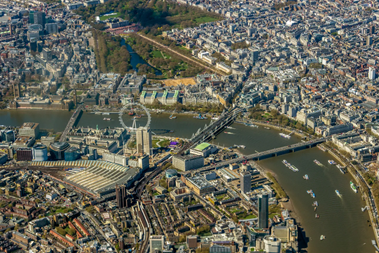
Lambeth is an inner borough of London in the county of Surrey. It extends south from the River Thames. I have seen several of the current day districts throughout the Woodman research. Along with Lambeth, there is family history in Vauxhall, Brixton, and Clapham.

Because of Lambeth’s proximity to central London, the northern area became an important manufacturing centre in the 18th century. Glass and pottery works were established in the area. On Albert’s birth and baptism records his father, Matthew William Woodman’s occupation is given as Potter. On the 1871 England Census, at the age of 14, Matthew already has the occupation of “Potters Laborer”.

The parish church, St. Mary’s, where Matthew William was baptized, lies alongside Lambeth Palace which is the London residence of the archbishop of Canterbury. This is still a working parish and a family home so it isn’t open to the public but when we visit, we will do one of the guided tours on one of the open days.


Modern day Lambeth Palace.    Photo: The Archbishop of Canterbury web site.


Modern day St. Mary's 2013.    Photo: Find-a-Grave website.


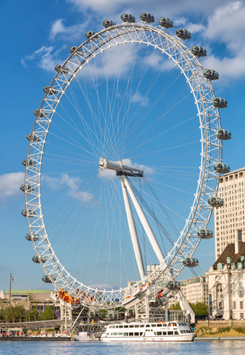
There are lots of things to see and do while walking the streets where our ancestors lived. Lambeth is directly across the Thames from Parliament and the City of Westminster. It has several museums, theatres, and the London Aquarium is there. And despite my fear of heights, while in Lambeth, we will have to ride the London Eye to get a bird’s eye view of London!


Lambeth; Thames, River. Encyclopaedia Britannica Website. https://www.britannica.com/place/Lambeth


Photo of the London Eye. Encyclopaedia Britannica Website. https://www.britannica.com/place/London-Eye


Friday, February 4, 2022

Acadian, René LeBlanq


My husband Dean and I have family that came from, or still live, in Nova Scotia, Canada. Several years ago, we moved to New Brunswick and while there, I took the opportunity to use the local resources to 'branch out' and research the Leblanc (LeBlanq/LeBlanc) family history. I was able to trace back to the earliest settlers, who it has been said established one of the largest family lineages in all of Acadia, in both Canada and the United States.

In my ‘branching out’ post for #52ancestors I’ve decided to write about Dean’s 5-times great-grandfather, René LeBlanq, one of the most well-known of the LeBlanq ancestors.

René was born in 1682, in Port Royal, Nova Scotia. At the time, the area was a focal point for France and Britain’s rivalry for control of it. This ended in 1713 when England was granted control of mainland Nova Scotia and France retained Cape Breton Island. But hostilities didn’t end completely, and the position of Acadians in Nova Scotia became increasingly precarious.

René was married twice. His first wife was Elisabeth (Isabelle) Melanson. They married in 1709 and had several children before her death December 12, 1718.

The union of René and his second wife, Marguerite Thébeau (Thibault), is the branch that Dean descends from.


Marguerite and René were married on November 26, 1720, in Port Royal. The marriage was very fruitful and between 1721 and 1748 they had 17 children – 5 sons and 12 daughters. This is an amazing fact by itself, but what I found fascinating about it is that Marie had several multiple births. Of their 17 children they had a set of triplets and three sets of twins!

~   Triplets - Marie, Marguerite and Anne born on July 25, 1721. I believe Anne was stillborn.

~   They had another daughter on September 29, 1724, who they also named Anne.

~   In early 1726, they had twin daughters, Blanche and Marie.

~   A daughter, Madeleine, was born on November 19, 1727.

~   Twin sons René and Simon were born November 10, 1731.

~   Three more daughters Francoise, May 1, 1734; Ursule, December 17, 1735; and Josephe-Marie, May 20, 1738.

~   Twins in early 1740. A son, Pierre-Benjamin, and daughter, Esther.

~   Two sons followed: Paul-Marie on May 2, 1742, and Jean-Baptiste-Marie June 25, 1744.

~   Their youngest daughter, Marie-Jeanne, was born April 5, 1748.


To support his large family, René practiced law and was named a Royal Notary. It was in this capacity that he was immortalized in the epic poem, Evangeline: A Tale of Acadie written by Henry Wadsworth Longfellow. It is a story of loss and devotion set against the deportation of the Acadian people in 1755. The notary in the poem is our ancestor René Leblanq.


Which brings me back to the precarious state for Acadian’s of the time. During the great deportation in 1755, René, Marguerite, and their sons, Pierre-Benjaman and Jean-Baptiste were deported. As I prepared this blog, I realized that I have not yet discovered what happened to their youngest daughter, Marie-Jeanne, and son Pierre-Marie at that time.  Another item for my parking lot to branch out to discover their fates.

René took ill while banished and died in Philadelphia in 1758. He is buried in Philadelphia in a potter’s field that is now known as Washington Square. In the square there is an epitaph for those who are buried there.  Below is a transcription of the text in the first section:

“Until the 19th Century, this was often a sorrowful place. Many people knew it as a potters field, a “publick burying place for all strangers,” for soldiers, sailors, convicts, and the “destitute whose remains are walked over.” A lonely Acadian refugee found eternal rest hear, along with epidemic victims, Catholics, and African Americans.”

Photo from Find-A-Grave


At the time of his death René had 21 children and almost 150 grandchildren. 


For more information on the Great Deportation follow the link below to watch a Heritage Minutes video on the Historics Canada website.

Heritage Minutes: Acadian Deportation


The Review and the Decision

  My application was approved!    Plymouth took a long look at all the evidence and has certified that I am a descendant of Stephen Hopkins....